

The Role of AI in Business Growth | Drive Smarter Decisions
Introduction to AI in Modern Business
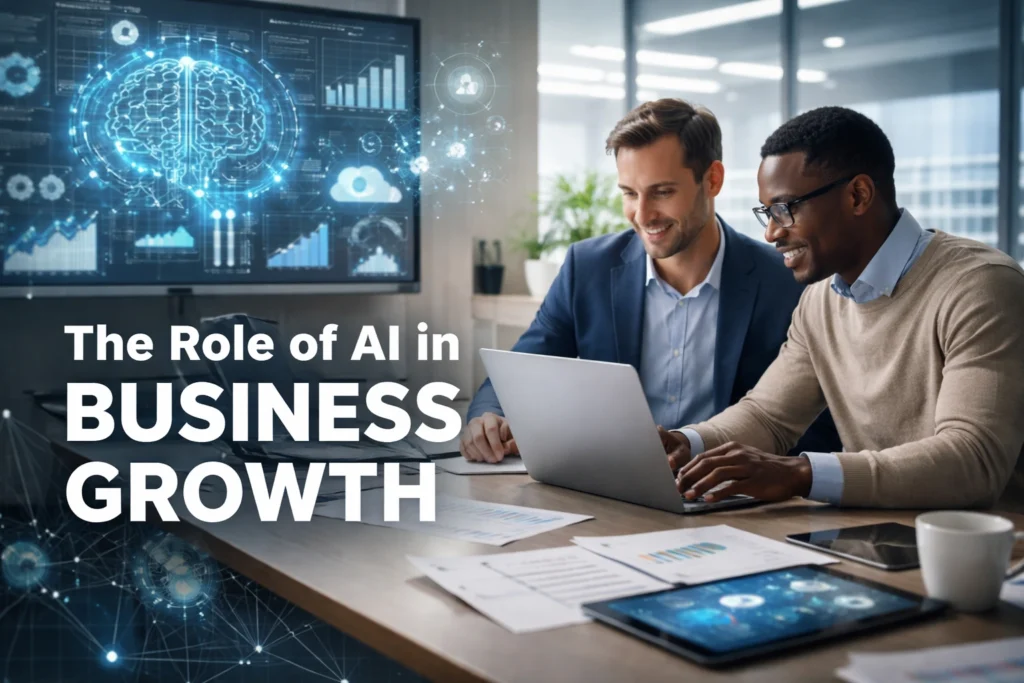
Artificial Intelligence has quickly moved from being a buzzword to a core driver of business growth. Today, companies across industries are using AI to work faster, make smarter decisions, and stay competitive in crowded markets. From startups to global enterprises, AI is reshaping how businesses operate, interact with customers, and plan for the future. Instead of relying only on human intuition, organizations now use AI-powered insights to reduce risk and uncover new opportunities. As digital transformation accelerates, AI is no longer optional; it has become a strategic necessity for sustainable and scalable business growth.
Why AI Is Becoming Essential for Business Growth
AI is becoming essential because modern businesses deal with massive amounts of data and rising customer expectations. Manual processes can no longer keep up. AI helps companies analyze data instantly, automate repetitive tasks, and respond to market changes in real time. This leads to better efficiency, lower costs, and faster innovation. Businesses that adopt AI early gain a clear advantage over competitors who rely on traditional methods.
What Is Artificial Intelligence in a Business Context
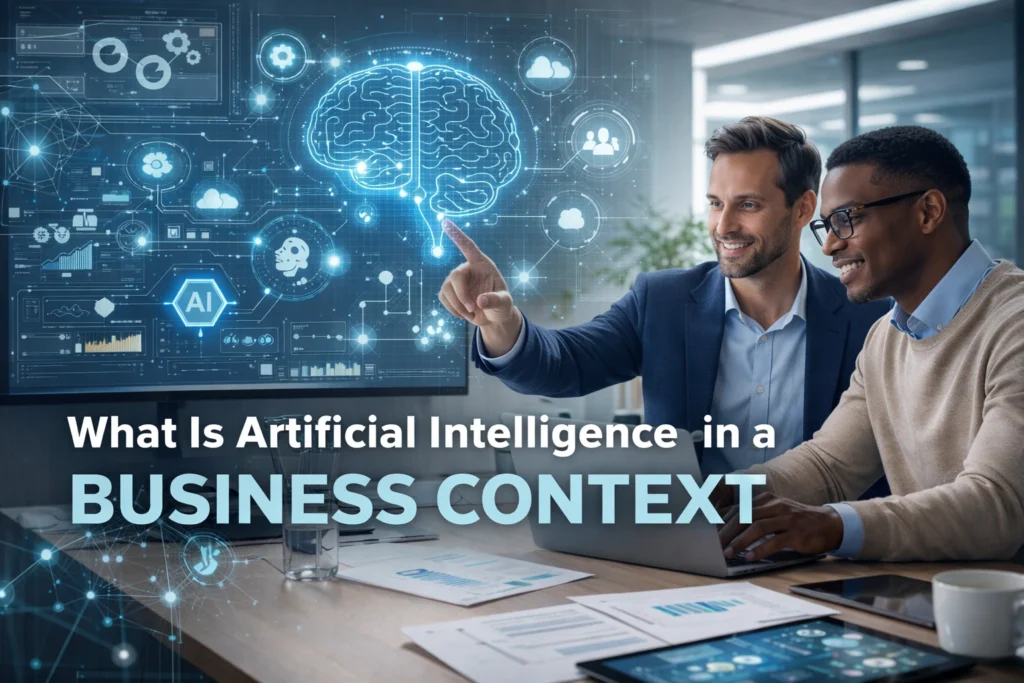
In a business context, Artificial Intelligence refers to technologies that enable machines to perform tasks that typically require human intelligence. These tasks involve analyzing data, identifying patterns, interpreting language, and making informed decisions. AI does not replace businesses it enhances them by improving accuracy and speed. Companies use AI to optimize operations, predict customer behavior, and improve strategic planning. When applied correctly, AI becomes a powerful tool that supports growth by turning raw data into actionable insights and enabling smarter, more agile business models.
👉 You might also like: Faibloh Explained: Boost Your Digital Presence Effectively
Key AI Technologies Used by Businesses Today
Businesses commonly use machine learning, natural language processing, computer vision, and robotic process automation. Machine learning helps systems improve over time, while NLP enables chatbots and voice assistants. Computer vision supports quality control and security, and automation tools streamline workflows. Together, these technologies form the foundation of modern AI-driven business growth.
How AI Drives Business Growth
AI drives business growth by enabling organizations to operate more efficiently and respond faster to opportunities. It helps companies identify trends, optimize pricing, and personalize customer experiences at scale. Instead of reacting to problems after they occur, businesses can use AI to predict outcomes and take proactive action. AI also reduces operational waste by automating time-consuming tasks, allowing teams to focus on strategy and creativity. Over time, these improvements compound, leading to higher productivity, stronger customer loyalty, and sustainable revenue growth across multiple business functions.
AI-Powered Data-Driven Decision Making
One of the biggest advantages of AI is its ability to support data-driven decision making. Businesses collect data from customers, operations, and markets, but AI turns that data into clear insights. AI systems analyze patterns that humans may overlook and provide recommendations based on evidence rather than guesswork. This results in more accurate planning and better outcomes. With AI, leaders can test scenarios, measure risks, and confidently choose strategies that align with growth objectives while minimizing uncertainty.
Predictive Analytics and Business Forecasting
Predictive analytics uses AI to forecast future trends based on historical data. Businesses apply it to anticipate demand, customer behavior, and market shifts. This allows companies to plan inventory, allocate resources, and adjust strategies before changes occur. Accurate forecasting improves efficiency and reduces costly surprises, making growth more predictable and manageable.
Improving Operational Efficiency with AI
AI plays a critical role in improving operational efficiency by streamlining workflows and eliminating bottlenecks. It helps businesses reduce manual effort, minimize errors, and speed up processes across departments. From scheduling and inventory management to customer support and reporting, AI-driven systems work continuously without fatigue. This leads to faster turnaround times and consistent performance. By optimizing daily operations, companies can lower costs and reinvest resources into innovation and expansion, directly supporting long-term business growth.
Process Automation and Cost Reduction
AI-powered automation handles repetitive tasks such as data entry, invoicing, and customer queries. This reduces labor costs and human error while improving accuracy. Employees can focus on higher-value work, increasing productivity. Over time, automation delivers measurable cost savings and creates a leaner, more efficient organization.
AI in Customer Experience and Engagement
Artificial Intelligence is reshaping the way companies engage with their customers. Modern consumers expect personalized experiences, instant responses, and seamless support across multiple channels. AI enables companies to meet these demands by analyzing customer behavior, preferences, and feedback in real time. Chatbots, recommendation engines, and predictive tools allow businesses to anticipate needs, offer targeted solutions, and create consistent engagement. By leveraging AI, companies not only enhance customer satisfaction but also build long-term loyalty, turning casual buyers into repeat customers and driving measurable growth.
Personalization Through AI Algorithms
AI algorithms can segment audiences and deliver personalized content, offers, and recommendations. This goes beyond simple targeting. AI predicts what customers want before they even ask, increasing engagement, conversions, and satisfaction.AI now makes it possible to deliver personalization on a large scale.
The Role of AI in Sales and Marketing Growth
AI revolutionizes sales and marketing by providing actionable insights that were previously impossible to access. Predictive lead scoring, dynamic pricing, and automated content creation allow businesses to focus efforts on high-impact areas. AI identifies trends, optimizes campaigns, and tracks customer journeys, ensuring that marketing resources yield maximum results. Sales teams benefit from better forecasting and smarter strategies that improve conversion rates. Integrating AI into sales and marketing processes ultimately drives revenue growth while making campaigns more efficient and measurable.
AI for Lead Generation and Conversion Optimization
AI tools can analyze past customer behavior to predict which leads are most likely to convert. Automated follow-ups, personalized recommendations, and optimized targeting improve conversion rates. Sales teams save time while achieving better results.
AI in Product Development and Innovation
AI accelerates product development by providing insights from customer feedback, market trends, and competitor analysis. Businesses can simulate designs, test prototypes virtually, and identify innovation opportunities faster. AI helps in prioritizing features that matter most to users, reducing time-to-market and development costs. By embedding AI into product strategy, companies can introduce innovative offerings that align with consumer needs and stay ahead of competitors, ensuring sustainable growth in a competitive marketplace.
Supply Chain and Logistics Optimization Using AI
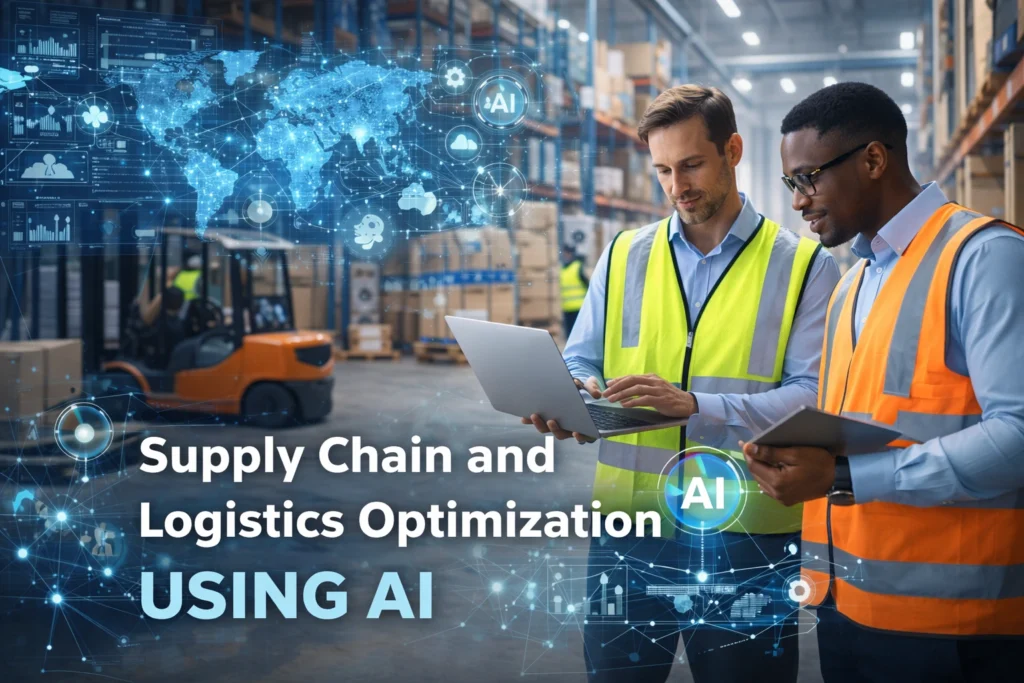
AI streamlines supply chain operations by predicting demand, optimizing inventory, and improving logistics efficiency. Companies can forecast potential disruptions, adjust production schedules, and reduce waste. AI also helps in real-time route optimization for deliveries, ensuring timely shipments. By integrating AI into supply chain management, businesses reduce costs, increase reliability, and maintain high service levels crucial factors for scaling operations and enhancing profitability in the long term.
👉 You might also like: A Complete Guide to Staying Safe Online in 2026
Financial Growth and Risk Management with AI
AI empowers finance teams to make smarter decisions by analyzing large datasets for trends, anomalies, and predictive insights. Risk management improves as AI identifies potential threats and flags inconsistencies. Businesses can automate auditing, monitor compliance, and detect fraud efficiently. With AI-driven financial insights, companies optimize budgets, forecast revenue, and make strategic investments confidently. These tools not only support financial growth but also safeguard assets, making AI indispensable for modern business operations.
Competitive Advantage Through AI Adoption
Adopting AI gives businesses a strategic edge over competitors who rely solely on traditional methods. Companies using AI can respond faster to market shifts, innovate proactively, and deliver superior customer experiences. AI-driven insights help identify untapped opportunities and emerging trends, enabling businesses to stay ahead. Over time, AI adoption transforms organizations into data-driven, agile enterprises capable of sustained growth and market leadership, ensuring long-term success in increasingly competitive industries.
AI for Small and Medium-Sized Businesses (SMEs)
Is AI no longer exclusive to large corporations; small and medium-sized businesses (SMEs) can leverage it to compete on a bigger scale. AI tools allow SMEs to automate repetitive tasks, analyze customer behavior, and optimize marketing campaigns without a huge IT budget. Cloud-based AI platforms make implementation accessible and cost-effective. By using AI to streamline operations and improve decision-making, SMEs can scale efficiently, enhance customer satisfaction, and identify growth opportunities that were previously out of reach, leveling the playing field with larger competitors.
Challenges and Limitations of AI in Business
While AI offers immense opportunities, businesses must acknowledge its challenges. High initial costs, data privacy concerns, and the need for skilled talent can slow adoption. Integrating AI into existing processes requires careful planning and change management. Organizations must also ensure that AI algorithms are unbiased and transparent. Without proper governance, companies risk inaccurate predictions or unintended consequences. Recognizing these limitations helps businesses prepare strategies to mitigate risks and ensure AI becomes a sustainable driver of growth rather than a costly experiment.
Data Privacy, Costs, and Skill Gaps
Businesses face hurdles like protecting sensitive customer data, managing infrastructure costs, and hiring employees skilled in AI technologies. Addressing these gaps is essential for successful AI integration and long-term ROI.
Future of AI in Business Growth
The future of AI in business is poised for unprecedented transformation. Emerging technologies like generative AI, reinforcement learning, and AI-driven predictive platforms will further accelerate innovation and efficiency. Companies adopting AI early will benefit from faster decision-making, improved customer insights, and enhanced operational agility. Collaboration between humans and AI will become a central part of workflows, combining creativity with data-driven accuracy. Businesses that embrace these trends can secure sustainable growth, remain competitive, and thrive in an increasingly digital and fast-paced market.
Emerging AI Trends Shaping Business Strategies
Next-generation AI tools will allow hyper-personalization, autonomous processes, and predictive strategy adjustments. Companies leveraging these trends can anticipate market needs and create highly responsive business models.
Conclusion

Artificial Intelligence is no longer optional; it’s a fundamental growth driver for businesses of all sizes. By integrating AI into operations, marketing, finance, and customer engagement, companies can achieve greater efficiency, higher revenue, and stronger competitive positioning. Successful AI adoption requires balancing technology with human insight, ethical considerations, and strategic planning. Businesses that embrace AI thoughtfully today are better positioned to innovate, scale, and secure sustainable growth tomorrow, making AI an essential component of modern business strategy.
✨ Good read? Better ones are coming, follow Dympigal