
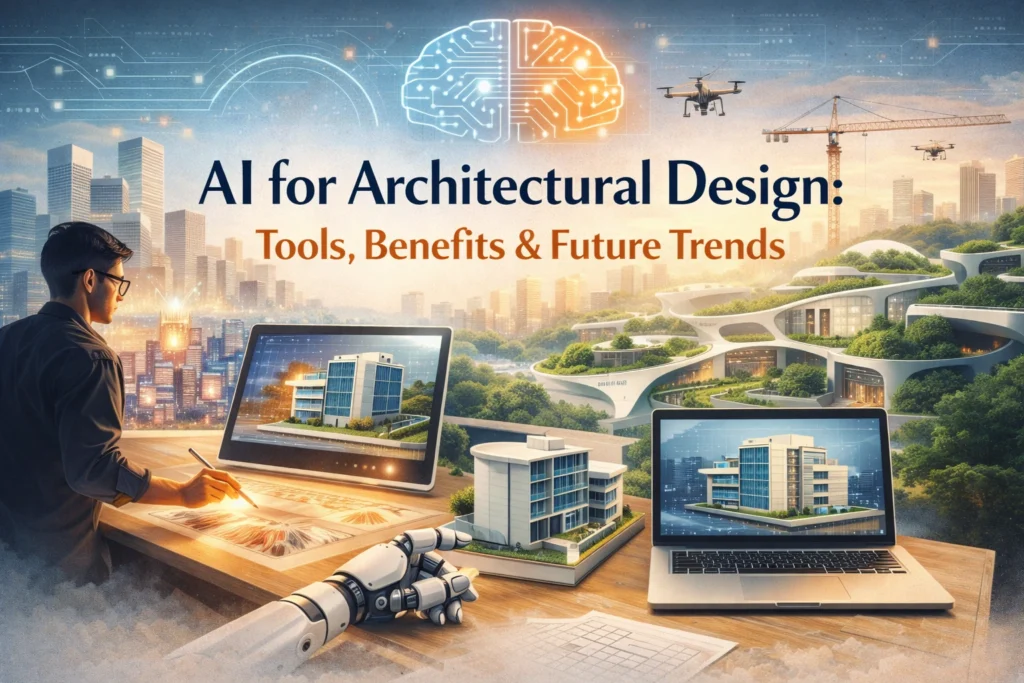

AI for Architectural Design: Tools, Benefits & Future Trends
AI in Architectural Design
Artificial Intelligence is reshaping how architects think, plan, and execute design ideas in today’s fast-paced world. Instead of relying solely on manual drafting or intuition, architects now use intelligent systems that can analyze massive datasets, predict outcomes, and generate optimized design solutions. AI in architectural design blends creativity with computational power, allowing professionals to explore ideas that were once impossible within time or budget constraints. From early-stage concepts to detailed modeling, AI enhances every phase of the process, making design smarter, faster, and more responsive to real-world conditions and client expectations.
Core Concepts of AI in Architecture
At its core, AI in architecture revolves around machine learning, data analysis, and automation. These systems learn from existing design patterns, environmental data, and user preferences to generate intelligent suggestions. Instead of replacing architects, AI acts as a collaborative tool that enhances decision-making, improves accuracy, and unlocks new creative possibilities within complex architectural challenges.
Evolution of Intelligent Design Systems
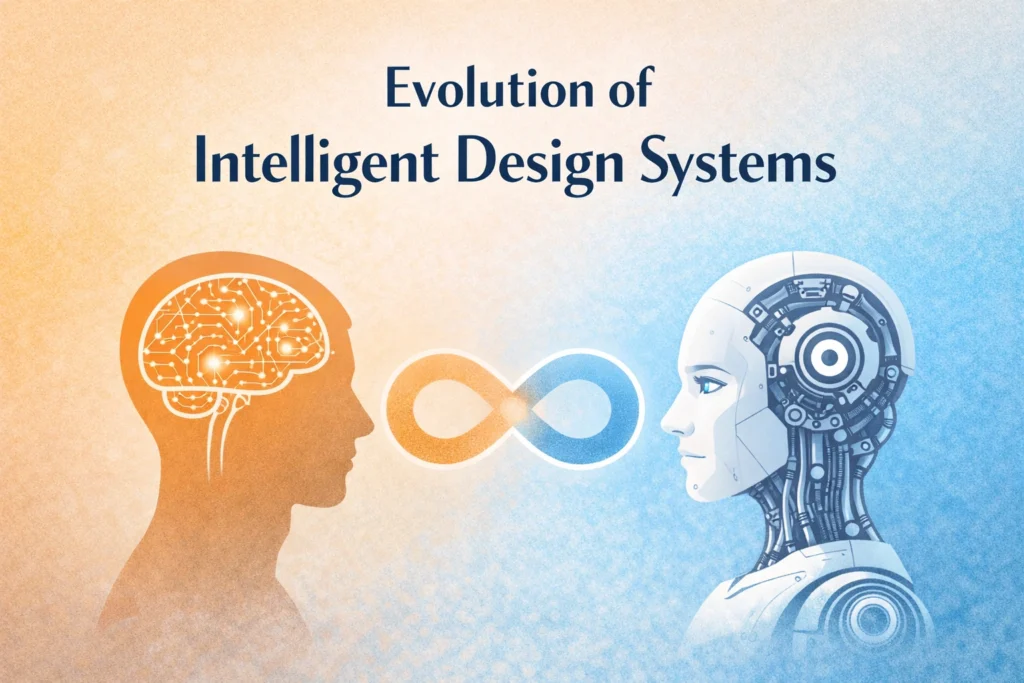
Architectural design has evolved significantly over the past few decades, moving from hand-drawn sketches to computer-aided design and now to AI-powered systems. Early digital tools improved precision, but they still required heavy manual input. Today, intelligent design systems go further by automating repetitive tasks and generating design alternatives based on predefined goals. This evolution reflects a shift from tool-based design to system-driven thinking, where architects focus more on strategy and creativity while AI handles optimization and data-heavy processes, ultimately transforming how buildings are conceived and developed.
AI’s Impact on Modern Architecture
AI is not just a supporting tool anymore; it’s becoming a core driver of innovation in modern architecture. It allows architects to simulate real-world conditions, test multiple design scenarios instantly, and make informed decisions backed by data. This leads to more efficient layouts, better material usage, and improved sustainability outcomes. AI also enhances collaboration by enabling real-time design adjustments and visualizations. As a result, architects can deliver more precise, customized, and high-performance designs that meet both client expectations and environmental standards without compromising creativity or design integrity.
Benefits of AI-Driven Design
The integration of AI into architectural workflows brings a wide range of benefits that directly impact productivity and design quality. AI can significantly reduce the time required for concept development, automate complex calculations, and minimize human error. It also provides data-driven insights that help architects make better decisions regarding structure, materials, and energy efficiency. Beyond efficiency, AI empowers designers to explore unconventional ideas and push creative boundaries. This combination of speed, accuracy, and innovation makes AI-driven design a powerful advantage in today’s competitive architectural landscape.
Speed, Precision, and Efficiency
AI dramatically improves workflow efficiency by automating time-consuming tasks such as drafting, modeling, and analysis. It ensures higher precision by reducing errors and providing accurate simulations. This allows architects to focus more on creativity and strategy while completing projects faster and delivering higher-quality results with greater confidence and consistency.
AI-Based Design Workflows
AI-based design workflows are transforming how architectural projects move from concept to completion. Instead of following a linear process, architects now work within dynamic systems where AI continuously analyzes inputs and suggests improvements. These workflows integrate data from multiple sources, including environmental conditions, user behavior, and structural requirements. As a result, architects can quickly iterate designs, test performance, and refine outcomes in real time. This flexible and adaptive approach not only improves efficiency but also ensures that the final design is optimized for functionality, sustainability, and overall user experience.
Generative & Algorithmic Design
Generative and algorithmic design represent one of the most powerful applications of AI in architecture, enabling architects to move beyond traditional limitations and explore thousands of design possibilities within minutes. By defining specific parameters such as space requirements, environmental conditions, and budget constraints, architects can use AI algorithms to automatically generate optimized design solutions. This approach shifts the role of the architect from manually creating forms to guiding intelligent systems. As a result, design becomes more exploratory, data-driven, and performance-oriented, allowing for innovative structures that are both functional and visually compelling.
Logic Behind Generative Systems
Generative systems rely on algorithms that process input data and constraints to produce multiple design variations. These systems evaluate each option based on performance metrics such as efficiency, cost, and sustainability. By continuously refining outputs, AI helps architects identify the most effective solutions without manually testing every possible design alternative.
Advanced AI Tools for Architects
The rise of AI has introduced a new generation of tools that are specifically designed to support architects at every stage of the design process. These tools can assist with everything from concept generation and space planning to rendering and performance analysis. Unlike traditional software, AI-powered platforms learn from user inputs and improve over time, making them more intuitive and efficient. Architects can now automate repetitive tasks, generate realistic visualizations, and analyze building performance with minimal effort, ultimately enhancing both productivity and design quality in a highly competitive industry.
AI in Visualization & Rendering
Visualization has always been a critical part of architectural design, and AI is taking it to the next level by producing highly realistic renders in a fraction of the time. AI-powered rendering tools can automatically adjust lighting, textures, and environmental conditions to create lifelike visuals that help clients better understand design concepts. This not only improves communication but also speeds up the approval process. With AI, architects can experiment with different design styles and instantly visualize the results, making the design process more interactive, efficient, and client-focused.
AI for Sustainable Architecture
Sustainability has become a key priority in modern architecture, and AI plays a crucial role in helping architects design environmentally responsible buildings. By analyzing data related to climate, energy consumption, and material performance, AI can recommend design strategies that reduce environmental impact. Architects can optimize building orientation, improve energy efficiency, and select sustainable materials with greater confidence. This data-driven approach ensures that sustainability is not an afterthought but an integral part of the design process, resulting in buildings that are both eco-friendly and cost-effective over the long term.
Smart Energy & Material Optimization
AI enables architects to analyze energy usage patterns and identify opportunities for efficiency improvements. It can suggest optimal materials based on durability, cost, and environmental impact. This ensures that buildings are not only sustainable but also economically viable, balancing performance with long-term operational savings and reduced carbon footprint.
AI in Urban Planning
AI is transforming urban planning by providing insights that help cities grow in a more organized and sustainable way. By analyzing large datasets such as population trends, traffic patterns, and environmental conditions, AI can assist planners in making informed decisions about infrastructure development. It enables the creation of smarter cities where resources are used efficiently, and spaces are designed to improve the quality of life. This technology allows urban planners and architects to collaborate more effectively, ensuring that future cities are resilient, adaptive, and aligned with the needs of growing populations.
Real-World AI Applications

AI is already being used in real-world architectural projects, proving its value beyond theory and experimentation. From designing complex building structures to optimizing construction workflows, AI is helping firms deliver projects faster and more efficiently. Architects use AI to analyze site conditions, predict structural performance, and generate design variations tailored to specific client needs. In large-scale developments, AI assists in managing resources and minimizing waste. These practical applications demonstrate how AI is not just a trend but a powerful tool that is actively reshaping the architecture industry across residential, commercial, and urban projects.
Challenges in AI Architecture
Despite its advantages, AI in architecture comes with several challenges that cannot be ignored. One major issue is the reliance on high-quality data, as inaccurate or incomplete data can lead to flawed design outcomes. Additionally, integrating AI tools into existing workflows can be complex and require significant investment in training and infrastructure. There are also concerns about over-reliance on automation, which may reduce the role of human intuition and creativity. Addressing these challenges requires a balanced approach where AI is used as a supportive tool rather than a complete replacement for human expertise.
Human vs AI in Design
The debate between human creativity and artificial intelligence continues to shape the future of architectural design. While AI excels at processing data, optimizing designs, and generating multiple solutions quickly, it lacks the emotional intelligence and cultural understanding that human architects bring to a project. Architecture is not just about functionality; it is also about storytelling, aesthetics, and human experience. AI should be seen as a collaborative partner that enhances human creativity rather than competing with it. The most successful designs often emerge from a combination of human insight and AI-driven efficiency.
Future of AI in Architecture
The future of AI in architecture looks incredibly promising as technology continues to evolve and integrate with other digital systems. AI is expected to become more intuitive, enabling architects to interact with design tools in more natural and efficient ways. As data availability increases, AI systems will deliver even more accurate predictions and design recommendations. The industry is moving toward fully integrated digital ecosystems where AI, automation, and real-time data work together to streamline the entire design and construction process, creating smarter, more adaptive, and highly efficient built environments.
AI + BIM Integration
The integration of AI with Building Information Modeling (BIM) is set to revolutionize architectural workflows. AI can enhance BIM by automating data analysis, detecting design conflicts, and optimizing building performance. This combination allows architects to manage complex projects more effectively while improving accuracy, collaboration, and overall project outcomes.
Conclusion
AI is redefining the boundaries of architectural design by combining advanced technology with creative exploration. It empowers architects to design faster, smarter, and more sustainably while tackling complex challenges with confidence. However, the true potential of AI lies in its collaboration with human expertise, not its replacement. As the industry continues to evolve, architects who embrace AI will gain a significant competitive advantage. By integrating intelligent tools into their workflows, they can deliver innovative, high-performance designs that meet the demands of a rapidly changing world and set new standards for the future of architecture.
✨ Got value? Let’s keep the momentum, follow Dympigal